
Visual Atmosphere Created Through Lighting Choices
Lighting Design in the Bronx for events that need mood control, focal area emphasis, and room transformation
Lighting design changes how guests perceive the space at Instyle Events by controlling brightness levels, color warmth, and where attention naturally falls throughout the room. The same venue can feel intimate and warm during dinner service, then shift to energetic and vibrant once dancing begins, depending on how lighting is programmed and adjusted. You'll notice this transformation as different lighting configurations activate specific zones while softening others.
Lighting decisions interact with every other design element you've selected, including florals, table colors, and architectural details. Without coordinated lighting, even carefully chosen decorations can appear flat or washed out, losing the visual impact you intended.
Arrange a lighting design session to map out how different illumination settings will support each phase of your event.
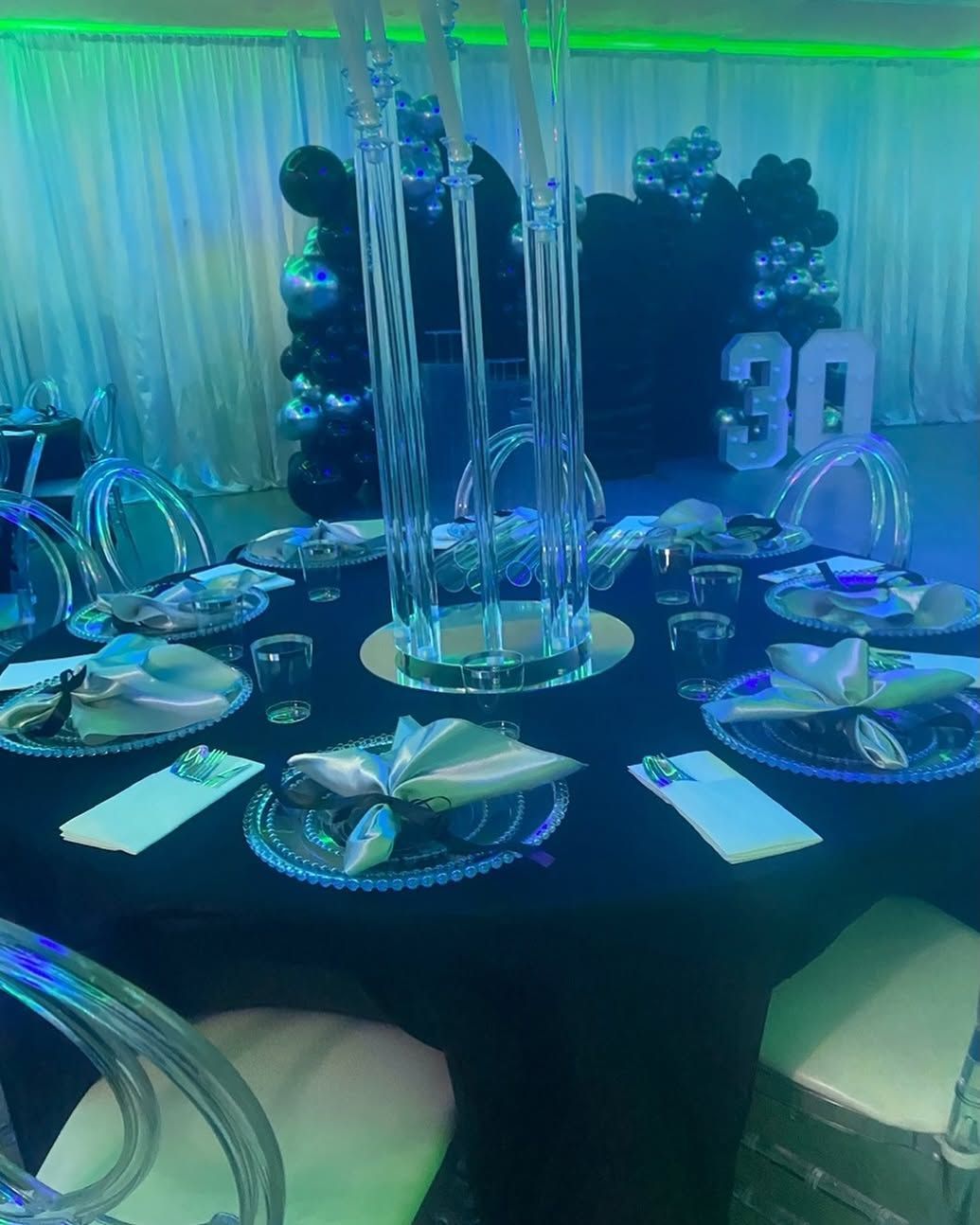
Why Lighting Affects Event Atmosphere
Lighting design begins by identifying which areas need emphasis during different event segments. Ceremony spaces benefit from focused illumination that draws attention forward, dining areas require even lighting that allows guests to see each other comfortably, and dance floors respond to dynamic lighting that builds energy and defines the performance space. Each zone receives a different treatment based on its function and the guest experience you want to create there.
When lighting is integrated into your event design, guests experience smooth transitions between activities without abrupt environmental shifts that interrupt the celebration's flow. The room feels intentionally curated rather than simply bright or dim, and focal points like floral installations or cake displays receive visual priority without competing with surrounding elements.
Instyle Events provides event lighting and AV capabilities built into the venue, which allows lighting adjustments to happen without external equipment rentals or coordination delays. This integration also means lighting can be tested and refined during setup rather than finalized only on event day.
Questions About Event Lighting
Lighting questions often arise once clients have selected their venue layout and design elements and begin considering how the space will look at different times during the celebration.
What can lighting design accomplish that standard room lighting cannot?
Design-focused lighting allows you to control which areas receive attention, adjust color temperature to match your theme, emphasize decorative elements, and change the room's energy level as the event progresses from one activity to another.
How does lighting interact with floral arrangements and other decorations?
Properly positioned lighting enhances color saturation in florals, creates depth around three-dimensional decor, and highlights textures that would otherwise blend into the background under flat overhead illumination.
When during the event planning process should lighting be discussed?
Lighting conversations should happen alongside decisions about room layout, color palette, and focal areas so that illumination supports rather than contradicts your overall design direction.
How is lighting adjusted for different event phases like dinner and dancing?
Lighting configurations are programmed in advance based on your event timeline, with settings designed for each activity phase and transitions managed so that changes feel intentional rather than jarring.
What lighting considerations are specific to venues in Bronx like Instyle Events?
Indoor event spaces benefit from controlled lighting that isn't affected by exterior ambient light or time of day, allowing consistent atmospheric control regardless of when your celebration is scheduled.
Lighting design at Instyle Events works together with your venue decorating, floral selections, and event timeline to create the atmosphere you're planning. Bring lighting into your overall event design conversation early so all visual elements reinforce each other.